There comes a time, actually, many times over the course of a medic's training, from the MBBS to residency, where the medic develops some form of existential crisis. Often, it happens in the preclinical years, where one drowns in an ocean of knowledge, information that is both imperative to examination and paramount to practice, yet it is an ocean that knows no depth. One sits in a small life boat in the middle of the storm, textbooks weighing down the small vessel as waves crash and water seeps into the hull.
I have been thinking about this storm for quite awhile. Every year, we lose classmates. Some don't make it pass the year, some quit. I wasn't close to any of them, but to me, and perhaps, to me alone, knowing about the war that awaits, it feels as though we've lost brothers-in-arms. It is something to mourn, as one drudges through Pathology, trying to memorise the course of pneumonia and identify neoplasms on histology slides. Together with being far from home, and from loved ones, perhaps even the cross of being a traditional Catholic in a former Catholic country has worn me done, and I find myself wondering, what else could I have done?
Medicine has always been my first choice, since I can recall. I've never thought of pursuing anything else, and anything that would potentially upset my chosen career path were instantly abandoned. I fought a long, hard, and bitter battle to finally enter medical school, though, along the way, it has always been suggested that I am not inclined for medicine, given my poor academic history, and perhaps other paths were better than me. Humanities, it had suggested, might have been a better avenue for academic investment. Alas, I am stubborn, very, very stubborn.
Yet, now, my mind drifts longingly back to summer, to that month where I was interning at a kindergarten, the happiest days I had last year. I'd never wanted to wake up and go to school as much as I did in those 4 short weeks. It wasn't just the colleagues who shared interesting conversations over breakfast, but more importantly, it was the chance to work with the little ones. It's no joke, quite a tiring affair, enough though, it's only half a day. These small, precious children, who want to be loved and want to love. They have their own world, which they deign to share with you, but, they appreciate you, and they show it. It is a very simple, yet very profound life.
It is far away, far removed from the complex web of operations that is the hospital. Far from the endless things to remember, the patients to see, the tests to interpret, the integration of many different areas of knowledge. The exhaustion and lack of appreciation from incorrigible patients who will literally die, but very slowly, holding onto poor habits and vices. It does tempt one to wonder, what life would have been down the road of liberal arts? I could be young Thomistic lecturer somewhere, teaching literature, exploring the fascinating world of theology and philosophy. Soaking up culture in the various performances that I could attend, writing books. Though of course, there is hardly a place in the modern university for a Thomist. Or maybe, to do early childhood, and go back to the kindergarten...
It has been a horrible year so far. I broke my heart again, after just fixing it. (It doesn't get the 'never again memo', endured a few health issues, and had work piled on by the dump truck. That said, I don't think I shall remove my self from this career, disturbed for scrubs, and not leisurely suits. There is a deeper calling, it moves stealthily amongst the hardships, pain, and the long nights. It hooks onto your soul, in a soft whisper, reminding, that to love is to suffer.
Sunday, February 23, 2014

Friday, February 14, 2014
Tuesday, February 11, 2014
Of Medics and their Pious Wives.

Today, I was listening to the Ven. Fulton Sheen tell the story for the conversion of Fr Felix Leseur, OP. Fr Leseur, pictured above, was a medical doctor in Paris and the erstwhile editor of an atheist newspaper that ran in city. His wife, yes, his wife, was the simple pious Servant of God, Élizabeth Leseur, won his conversion by offering up her life in exchange for his soul....and his vocation.
After she passed away from breast cancer in 1914, Dr Leseur discovered a note written to him in her papers. It said: "In 1905, I asked almighty God to send me sufficient sufferings to purchase your soul. On the day that I die, the price will have been paid. Greater love than this no woman has than she who lay down her life for her husband."
This eventually lead to the crumbling of the walls of atheism when he visited Lourdes after her death to write a book about its falsity, eventually, he was ordained priest of the order of preachers and began many a sermon with, 'As my wife, Élizabeth, says...'
This reminded me of a lovely book that I had finished last month on the life of Servant of God, Dr Nagai Takashi, a pioneering radiologist with the University of Nakasaki in Japan. Like Fr Leseur, Dr Nagai's soul was also won by the pious prayers and sufferings of his Catholic wife-to-be, Midori.

The story of Nagai and Midori, which you can read in full in Fr Paul Gynn, S.M.'s book, A Song for Nagasaki, is almost a fairytale worthy of a hollywood movie (which is in post production). The atheistic Nagai, having discovered Pascal's Penseés, searched for a Catholic family to stay with while completing his medical studies. As the perfect plan of God will have it, the family also had a beautiful, single, and pious daughter. They met for the first time when Nagai was invited to partake in the Christmas festivities on Christmas eve, a very foreign holiday. That night, through the correct diagnosis of appendicitis and by carrying Midori on his back through a blizzard to the hospital, he saved her life. Midori would later save his soul.
There is another fairytale event that occurred before their official courtship. Dr Nagai was conscripted and sent off to fight in the Sino-Japanese war in Manchuria. As with all young army boys away from home, he and his platoonmates took the opportunity during their first weekend off to get drunk and go to a brothel. There, facing the prostitute, Nagai was unable to carry out the act, losing all desire for it. He later writes in one of his books, that at that precise moment, 'a young woman was praying for me before a statue of the Blessed Virgin in Nagasaki Cathedral.' A discovery made, when he received her letter a few days later, together with a catechism.
He eventually returned, and went to see Midori, hoping to apologise to Midori for a prior transgression, but unable to say anything, he placed the cardigan she knitted for him and left. Much pain did he cause her in that moment of confusion, and through the whole war. From the book,
Tears coursing down her cheeks, she prayed: 'Jesus, here is his cardigan. I begged you to bring him back and you did. Thank you. You know that I love him, Lord, but that someone far more academic than I must be his wife. I suppose you smile at me, Lord, for even dreaming of marrying him! Now that he is safely back from the war, I shall meet some of the men my parents and the go-between suggest. I offer you the pain he has brought me, Lord, as a prayer that he will receive the gift of faith.'
She felt drained. She tried to busy herself but finally slipped out of the house and walked the quarter mile to the cathedral. At its entrance was a stone crucifixion scene. She glanced up at the Sorrowful Mother and murmured interiorly as she passed: 'You always said yes to God. Help me, Mother, to say yes. But why does God make life so painful? I feel lost. Show me the way.' She entered the dim cathedral, knelt and took out her rosary. It was Friday, the day for the five sorrowful mysteries. That matched the pain in her heart. Twenty minutes later, she lifted her head as she rose from her knees-- and froze on the spot. Nagai was kneeling up at the front of the cathedral absorbed, it seemed, in prayer. It seemed that Christ was saying: 'Midori, your task is finished. Now that he is home with me, you must forget him.' Her genuflection was the heaviest she had ever made.
Shortly after, Dr Nagai was baptised and took Midori for his bride.
God certainly uses such romantic stories to remind us to hope and to aspire toward true love, that is the love of the Cross. To choose to suffer and wish for the highest good of another. Not all of our sufferings will bear fruit before our eyes as Midori, sometimes it will happen after we pass, like Élizabeth Leseur, yet, the end is the same, love will eventually conquer all.
That, and I also noticed a trend! It's seems atheist doctors have it easier finding pious Catholic wives. Guess, I better start studying Dawkins. Hmmmmm...
Abp Fulton Sheen tells the story of Fr Leseur, OP
Wednesday, January 29, 2014
Poems 2014
I've run out of creativity for the year.
At Sea.
For I
The sun streams through the window,
warming my face, as I stare out at the aerial sea,
at the sunbaked, mechanical wings flapping,
taking this ship higher, higher.
Fifty-thousand feet up at sea,
Above the lush coral-fields of clouds,
Traveling through these crystal clear hues,
Of never-ending blues.
The sky-turtles float about aimlessly,
Dancing amidst the majestic mantas,
Who soar, wings open, effortlessly.
I cannot help but think of you.
Back before this ship took flight,
In those sunny, sunny, summer days,
When we took a sail out to sea at first light,
Adventures— up and down the waves,
Navigating through the nimbus and flocus,
Spying fish, and swimming down deep.
I close my eyes and I can still see your face;
Wishing you’d stay, as I feel the warm sun weep
Luminescent rays through the window,
Shining on sunbaked, mechanical wings flapping,
Taking this ship further, further away.
Through the white fields,
fortress of clouds.
A pod of orcas fly by.
Time Flies.
My life in a trunk,
Packed in a flying metal box,
Across the seas and back again,
Soaring over the forest of clouds,
Thirty-five thousand feet above again.
Across snowy mountains and sunny seas
To green, green island,
To learn of trypsin,
and murmurs,
And back again,
Time flies they say,
Three more years.
Houseman.
The work day has started,
‘Doctor, doctor!’ I hear some nurse shriek.
I hope she didn’t mean me.
Oh no, here she comes.
‘Put in a line’, she says.
I fumble, once, no, twice,
mumbling apologies, mumble, mumble.
‘Thank you, doctor’
Doctor, it seems so surreal,
I don’t deserve it.
Is that really me?
It seems last yesterday I was still a student,
Just a baby, protected, babied, taught.
Now, I am writing prescriptions.
Hoping not to get caught,
And scolded.
I have grown old,
The work day has started.
The Consultant.
The sun breaks across the wards,
Illuminating the volleys of pills and needles.
Officers running around with boards,
Checking plans, and scripts, and vitals.
Amidst the morning battle,
He calmly strolls across the ward,
Like a colonel, silver eagle on his chest,
stethoscope in hand,
Combat-ready, he summons the men,
His officers, in fear, fall in around the bed,
While Sargeant Majoress keeps order.
‘So, tell me how is Mr Tan today.’
The captain goes first, telling his report,
Then, the lieutenants are questioned,
belittled, humbled, drawn, and taught.
Silently, the cadet moves out of harm’s way.
They move from bed to bed,
At every turn, he demonstrates his prowess,
reminding them of the gulf until they are dismissed.
Off to war again, better equipped,
learning, day by day.
Ascent.
For J
White veil of snow a top her head,
Unscalable mountain with the broken feet.
Little holes where miners drilled for gold.
They'd missed the mark, aimed far too low,
For her heart was the most expensive,
A furnace in this blistering cold.
Hands wrapped around hot chocolate,
Half mad from fighting hypothermia.
Often, the wind seemed to whisper.
That giggle, teasing, sweet sounds
Now forgotten, buried deep in snow.
An eye, a smile, sweet dimples
Warms the heart some winters ago.
The tundra is a frozen white wasteland
Of bellowing winds, all shoveling snow
Across the blades of grass
these dreams from long,
long ago.
More Haikus
Heart.
Broken and battered,
This heart will not stop pumping.
Give up or fight on?
Silence.
Anxious silence.
Stubbornness is a bad trait;
Just admit defeat.
Broken and battered,
This heart will not stop pumping.
Give up or fight on?
Silence.
Anxious silence.
Stubbornness is a bad trait;
Just admit defeat.
Pathology Haiku
Learning path is strange.
Ovary's teratoma:
Find full teeth down there
For the uninspired, a teratoma is a germ cell neoplasm (read tumour). Germ cells are the stuff sperm and eggs are made off and they can become any cell type in your body. Hence, it is not unusual in ovarian teratomas, to find all sorts of weird things in there, including fully formed teeth. I am not going to apologise for the graphic nature of this next image:

As you can see, lovely, fully formed teeth.
Luckily, these are rare. More women who get an ovarian teratoma will get a benign dermoid cyst. However, teratomas in men are usually malignant. :/
This post has been inspired by Eric Chudler's Neuroscience Haikus
Tuesday, January 28, 2014
3rd Sunday After Epiphany
'And behold a leper came and adored Him, saying, "Lord, if Thou wilt, Thou canst make me clean." /And Jesus stretching forth His hand, touched him, saying, 'I will, be thou made clean. And forthwith his leprosy was cleansed.' - Matt. VIII.ii-iii
This, taken from yesterday's gospel, for the Third Sunday after Epiphany, is one of my favourite passages from the gospel of Matthew. The text above, taken from the great Douay-Rheims, doesn't quite do justice to the impact of the words, at least, to our modern ears as we have lost the subtle specific difference between ‘will’ and ‘shall’. The Latin reads: ‘Domine, si vis, potes me mundare. Jesus…dicens: Volo. Mundare.’ O Lord, if Thou wished, Thou [has the power to] cleanse me. Jesus… [said], ‘I wish. Be clean.’ Volo means to want, to wish, to desire, which is what ‘I will’ implies, as opposed to the more matter of fact ‘I shall’.
How powerful that is! The Lord, not only can heal the leper, the diseased outcast, but desires to! This is completely in line with the remainder of the gospel, which showcased the great charity of God, healing all the multitudes, culminating in the great faith of the Roman Centurion, with his Domine non sum dignus. Yet, through it all, it is this that really strikes me today, the desire of the Lord to heal us. That great overwhelming charity and mercy that He wants to pour upon us in buckets, to make us new again, whole, complete, perfect. A desire, which our priest reminded us yesterday, was a most scandalous thing to do in Jewish society, to give court to the diseased and the outcast, and not only to heal them, but to touch them as well. It is an intimate desire of Our Lord to connect with us, to touch us, as any good physician would do, as we are, as broken, sinful humans, and to make us whole.
But, there is another aspect to examine as well, the desire and the faith of the Leper. He is the one who approached the Lord with courage and faith, to beg for healing, to ask to be cleaned. Likewise, so too must we, approach the Lord in similar fashion if we are to seek similar graces. This is the beauty of God’s goodness, the free will of the unclean leper to approach Christ, the fount of infinite mercy and love, so that we are drawn to cooperate with God, to submit to receive His gifts. Christ has already made Himself known to us His desire to strip us of our pains, torments, imperfections, and to bring us to salvation, yet how often do we choose to approach? More oft than not, this gift of free will is abused, in the act of sin, the denial of His existence, the abuse and violence against His church. Yet, even then, He is merciful, as Pascal wrote, granting those who desire to see Him enough light to do so, and those who do not, as Russell, Nietzsche, and many others, enough darkness to shrink from Him and hide.
It is thus amazing that we do not seek Him to beg for His gifts and mercy, He, the creator of the universe, of all that exists, He who desires, who wants to heal us, and complete us! Woe is my soul, seeking for earthly things, to ‘enjoy myself’ with parties, and human accolades, and selfish adventures, these transient pleasures, instead of the blessedness, the eudaimonia, the true happiness and peace that only He can give, and that He wishes to. Let us pray for the grace, for guidance of the Holy spirit to orientate us back onto the narrow path, seeking Christ, so that we may ask, ‘Domine, si vis, potes me mundare.’ So that, we may hear, ‘Volo. Mundare.’
Sunday, April 28, 2013
Quo Vadis, Domine?
Today is the 4th Sunday of Easter in the Extraordinary Form. The gospel today is from John, where St Peter asks Christ, 'Quo vadis, Domine?', 'Where are you going, O Lord?'. This is where the first Holy Father promised Christ to go where ever He went, even unto death, and Christ foretold that St Peter would deny Him three times. According to Holy Tradition, St Peter asks Christ this same question again, where upon fleeing Rome, he meets Christ, carrying his cross toward the Eternal City.
It is one of my favourite stories, and I have written a reflection about it earlier in the academic year.
Read it here: http://derelictlife.blogspot.ie/2013/01/agapas-me.html
It is one of my favourite stories, and I have written a reflection about it earlier in the academic year.
Read it here: http://derelictlife.blogspot.ie/2013/01/agapas-me.html
Friday, April 26, 2013
I Had One Once.
I had one once, once upon an age ago,
When my world still held some colours,
And little dreams and hopes dashed about,
Giggling in gaggles and schools amidst the flowers.
But, I am blind now, and the world is
All white, and black, and gray.
Age has left me with little, little reason
And thinking in syllogisms helps pass the time
As I wait for the drip to go
Drip, drip, drip,
Sliding little drops of narcotiacs into
Empty, empty spaces.
I had one once,
But I left it in a box, in a far away place.
On a hill, amidst the bright and pretty flowers,
Broken, and shattered, and still working,
Albeit all the missing pieces.
The oxygenated grass is gleaming.
Friday, March 29, 2013
Not exactly Holy Thursday thoughts, though maybe those for later.
'We have a strict right to the love of God, because of our vocation is to follow Him; we cannot do this unless we love Him. Jesus will assuredly give us a sensible love of Him, if I only ask. I must ask, seek, and knock daily and hourly.' - Fr William Doyle, SJ
'We have a strict right to the love of God, because of our vocation is to follow Him; we cannot do this unless we love Him. Jesus will assuredly give us a sensible love of Him, if I only ask. I must ask, seek, and knock daily and hourly.' - Fr William Doyle, SJ
Wednesday, March 06, 2013
On Suffering and Lent.
After showing my friend the Bl. Dom. Marmion article featured in the last post, she asked, 'Is this a way of telling me, I should suffer during lent?'
That would probably seem to be the question on many minds, to which I can only answer:
Uh. Yes... Pretty much.
Why must we suffer? Suffering is such a taboo phrase in today's culture. We actually not permitted to suffer in society. Unwanted babies who upset our lifestyles and require to suffer living a more simple life are aborted and thrown into the dumpster (literally). Grandma who can't take of herself anymore gets offed, so she doesn't make us suffer to take care of her. Can't suffer the pangs of parenthood, dump the kids in school, the teachers are supposed to teach them everything right?

Such is our lavish culture of comforts and express services that we no longer even have to suffer patience for what we want. It's all here, and now. Sex doesn't need to wait for marriage. Shopping doesn't need to wait for the drive to the mall. Come on, when was the last time you rapped your fingers impatiently waiting for your website to load on your 100mb/s modem?
So why suffer? 'If any man will come after me, let him deny himself, and take up his cross daily; and follow me' (Lk 9:23)
Very simply put, because of Love. We love Christ, and therefore want to be with Him everywhere. He denied Himself in the desert for forty days. We want to be with him in the desert. He carried His cross on His blooded and torn shoulders. We want to carry our cross. He was nailed to His cross and suffered. So, must we want to be nailed to ours and suffer.
It is this unity with Christ on the cross through suffering that earns us our salvation, the chance to be with Christ whom we love the most for all eternity!
And so how can one suffer? Christ lays it so clearly in the aforementioned verse:
1. Let him deny himself.
2. and take up his cross daily.
The first kind of suffering is self-denial, it is a voluntary penance. It is mortification, the dying of the self. What the church prescribes yearly, as the obligatory abstinence from flesh meat during fridays and Lent, and the fasting during Ash Wednesday and Good Friday. This is the minimum one should do, and of course one may do more. Why not give up meat every friday?
It doesn't have to be a huge mortification; and they are not supposed to affect your health, it could merely be something very tiny like eating everything on your plate, especially if you hate it. It could be taking a cold shower once a week if you usually take warm ones. It could be praising God for all the good things that He's given to your enemy (or annoying little sister) when he annoys you. But it has to hurt.
It has to hurt in order to detach ourselves from the world so that we may be untied with Christ on the cross. Only when are bound to Him, can we be with Him in heaven, where we belong. These little mortifications are the purifying fires that purge ill habits and impurities, and make us tough and strong, and capable of facing the evils of the world. They reign in our passions and give us strength to say 'no' in a world that has forgotten how. Most importantly, they teach us to turn to cross to endure them, because without His grace we would fail.
The second kind of suffering is given to us. These crosses that the Lord generously sends our way. These are the ones we have no control off, the accidents, the injuries, the slip-ups, the cancers, the thunderstorms, the disappointments. The Lord gives these to us that we may endure them, and like in mortification, to turn to His cross for strength, and to give them back to Him as a penance.
There is not one rugby player who has won games who has not had to suffer the pain of being tackled and stepped on during training. There is not one sprinter who has won medals who did not endure limping home on jelly legs. There is not one doctor who has not had endure being dressed down by consultants or 36 hour shifts. One has to suffer to get to where one wants to be. So it is with Heaven.
The road to Heaven is a thin and narrow one, filled with many thorns, briars, and pitfalls. However, Heaven itself is the most wonderful place that one could ever exist in. To be forever, permanently in the loving presence of Jesus. To go to Heaven, we must imitate Christ, the ruler of Heaven. We must suffer.
That would probably seem to be the question on many minds, to which I can only answer:
Uh. Yes... Pretty much.
Why must we suffer? Suffering is such a taboo phrase in today's culture. We actually not permitted to suffer in society. Unwanted babies who upset our lifestyles and require to suffer living a more simple life are aborted and thrown into the dumpster (literally). Grandma who can't take of herself anymore gets offed, so she doesn't make us suffer to take care of her. Can't suffer the pangs of parenthood, dump the kids in school, the teachers are supposed to teach them everything right?

So why suffer? 'If any man will come after me, let him deny himself, and take up his cross daily; and follow me' (Lk 9:23)
Very simply put, because of Love. We love Christ, and therefore want to be with Him everywhere. He denied Himself in the desert for forty days. We want to be with him in the desert. He carried His cross on His blooded and torn shoulders. We want to carry our cross. He was nailed to His cross and suffered. So, must we want to be nailed to ours and suffer.
It is this unity with Christ on the cross through suffering that earns us our salvation, the chance to be with Christ whom we love the most for all eternity!
And so how can one suffer? Christ lays it so clearly in the aforementioned verse:
1. Let him deny himself.
2. and take up his cross daily.
The first kind of suffering is self-denial, it is a voluntary penance. It is mortification, the dying of the self. What the church prescribes yearly, as the obligatory abstinence from flesh meat during fridays and Lent, and the fasting during Ash Wednesday and Good Friday. This is the minimum one should do, and of course one may do more. Why not give up meat every friday?
It doesn't have to be a huge mortification; and they are not supposed to affect your health, it could merely be something very tiny like eating everything on your plate, especially if you hate it. It could be taking a cold shower once a week if you usually take warm ones. It could be praising God for all the good things that He's given to your enemy (or annoying little sister) when he annoys you. But it has to hurt.
It has to hurt in order to detach ourselves from the world so that we may be untied with Christ on the cross. Only when are bound to Him, can we be with Him in heaven, where we belong. These little mortifications are the purifying fires that purge ill habits and impurities, and make us tough and strong, and capable of facing the evils of the world. They reign in our passions and give us strength to say 'no' in a world that has forgotten how. Most importantly, they teach us to turn to cross to endure them, because without His grace we would fail.
The second kind of suffering is given to us. These crosses that the Lord generously sends our way. These are the ones we have no control off, the accidents, the injuries, the slip-ups, the cancers, the thunderstorms, the disappointments. The Lord gives these to us that we may endure them, and like in mortification, to turn to His cross for strength, and to give them back to Him as a penance.
There is not one rugby player who has won games who has not had to suffer the pain of being tackled and stepped on during training. There is not one sprinter who has won medals who did not endure limping home on jelly legs. There is not one doctor who has not had endure being dressed down by consultants or 36 hour shifts. One has to suffer to get to where one wants to be. So it is with Heaven.
The road to Heaven is a thin and narrow one, filled with many thorns, briars, and pitfalls. However, Heaven itself is the most wonderful place that one could ever exist in. To be forever, permanently in the loving presence of Jesus. To go to Heaven, we must imitate Christ, the ruler of Heaven. We must suffer.
Thursday, February 21, 2013
Obedience and Lent.
My deepest apologies for allowing the weeds to grow wild in these last few months. Being the new year, I do resolve once again to blog a bit more regularly, hopefully at at least once a week, if my brain will churn out something more than, 'sleeeeeeeep.'
My thoughts today turn towards obedience, as the Lord has directed much of the last few weeks. Here is an interesting reflection by the Bl. Dom. Marmion, OSB, for Ash Wednesday.

What the good abbot is getting across here is the necessary virtue of obedience. Obedience first and foremost to God, to His vicar on earth, and to His church. Obedience is the first virtue one must have as a Christian. So highly valued is this virtue by God, that He Himself was 'made subject' to His earthly parents. The creator submitting Himself to the created to demonstrate how valuable this virtue is.
This is also the most difficult virtue to master, for it requires humility. It requires one to become low, and to sacrifice one's personal desires, one's self to the will of another, requires one to be dependent on another. How foreign that must sound to the modern ear! Today's young heroes are proud, independent, rebellious, with little care for morals or laws, and these are whom society role models. How is one supposed to learn the virtue of obedience while talking back to one's parents?
Yet, this is what Christ desires most, the complete submission of self to His Divine Will. That is why the religious life is the highest form of living, because they live under a vow of strict obedience to their superior. It is a fast-track to holiness, they are, ideally, sacrificed themselves to be subject to their superior and to the rule. Consider how, they, despite their keen desire to be unseen and unheard, wear their habit in public out of obedience and as a symbol of their state in life. But, it is not only them who are called to obedience, Christ calls us all, 'The man who loves me is the man who keeps the commandments he has from me;' (Jn 14:21).
The question then, is how does one discern the Will of God? The very first, though not very obvious answer, is to ask Holy Mother Church, to whom the safeguarding of the very teachings of God was given. While God certainly has an individual plan for each of us, it would be contrary for His plan to contradict what He has given the Church to guide each of us. Which is why, to follow what the Church has in her traditions and in her law first, before attempting to seek additional means of expiation, is most acceptable to God.
For some of us, even the 1983 reduced obligatory periods of abstinence in lent (only Fridays) are crippling enough, whereas to others, to submit and obey to that first before seeking other penances (under the guidance of a spiritual director) is the struggle. At the end of the day, it requires that we put ourselves last, and Christ first, that requires much prayer for grace to achieve. That is what Lent teaches us, to depend solely on Christ, to lean completely on His cross, that is how one wades through the sufferings that can come through obedience.
However, such obedience is not merely limited to Lent, but to our entires lives, our entire Faith. How often does one ignore or neglect to find out the Church's teachings before seeking one's own method? How often does one choose to deny the Church until one has been persuaded to view of Holy Mother Church?
How often in music ministry does one ignore the documents of Vatican II that state, '[Gregorian chant] should be given pride of place in liturgical services.'? Is one's understanding and knowledge greater than that of the council, of the Magisterium? Has one actually tried to use chant in Mass? To understand the chant?
How often does one receive communion on the hand, knowing full well that the Church prefers one to receive communion on the tongue?
How often does one ignore the Church's teachings on chastity, and purity, in order to justify one's lifestyle choices?
How often does one ignore the Church's teachings on the necessity of frequent and regular confession? How often has one receive communion in the state of mortal sin, just because one didn't want to stand out?
I ask these not to accuse, but as a most wretched sinner guilty of all of them, to drive home the unhappiness of disobedience and the difficulty of obedience. However, God is not blind, every act of obedience pleases Him greatly, and He will surely affirm and reward us for it.
We have, as the adopted sons and daughters of God, the obligation to know what He desires of us, first and foremost through the Church, and to carry out His will. If we do not obey Him, especially on what has been made explicitly clear, we cannot truly love God. And if we do not love God, we will never find joy and peace.
Try obedience this lent!
UPDATE: Follow up post: http://derelictlife.blogspot.ie/2013/03/on-suffering-and-lent.html
UPDATE: Follow up post: http://derelictlife.blogspot.ie/2013/03/on-suffering-and-lent.html
Sunday, January 06, 2013
Agapas me?
I cannot study for my impending examinations anymore. So, while waiting for the right time to leave for Mass, I thought I might resume my writing. My apologies that this blog has been quite barren for the last few months. Med School, like the tempest that it is has completely engulfed me in a tsunami. All these fatal watery allusions should also allude to you, my dear reader, my desperate need of prayers! I would be most grateful if you would stop and say a short prayer to St Joseph Cupertino, the patron of students taking exams, and St Giuseppe Moscati, the patron saint of doctors, for me.
There are two kinds of conversions. The ones that happen to St Paul, like a flash of lightning. Where one is thrown off one's horse and immediately realises God, and makes the appropriate response: to love Him completely without turning back.
Then, there are the type of conversions that happen to St Peter. Slow, and gradual, and they continue on for the rest of one's life. Unlike St Paul, who was a great intellectual and of strong character, St Peter was not so bright, impulsive, headstrong, intense, and cowardly. Which is why I relate quite a bit to the first pope.
How often have I found myself, upon hearing my Lord speak, ask, 'Quod vadis Domine?' (Where are you going, O Lord?), and upon hearing the answer that I, like St Peter, not yet completely ready, to blurt out, 'Quare non possum te sequi modo? animam meam pro te ponam.' (Why can I not follow you now? I will lay down my life for you.') Though of course, St Peter, in all his impulsiveness, loved our Lord completely with all his being. He really meant it at that time, and I hope that I do to.
And yet, sooner or later, one finds himself, as did the Holy Father, to have fallen into mortal sin. To have denied Christ. For that is what a mortal sin is, to choose, for whatever moment, to deny any truth about God. That His love is not enough, or that His promises are not true, or to deny Him, as Simon Peter did, completely.
And later on, one creeps back into the confessional, with contrition, into the arms of the Lord, as He stands by the fire, reminding us of what we have done, as He did St Peter. And He asks, 'Do you, Agape me?' Do you love me with a complete, unconditional and sacrificial divine love?
To which one replies, 'Lord, you know that I Philio you', That I love you with the imperfect, emotional human love. As like St Peter, desiring fully to love the Lord, but fearing to fall again into that dreaded trap of denial, because we are still attached to the world.
And again He asks again, 'Do you, Agape me?'
And again one replies, 'I Philio you.'
And finally He accepts, and asks, 'do you Philio me?'
And we are disappointed, like St Peter, and reaffirm, 'yes, I Philio you.'
The Lord accepts this, because at that time, He knows that is all that one can give, He lets us carry a cross that is always heavy to us, but never more than we can bear. However, He will not accept philio from us forever, He will continue to pursue us throughout our lives, asking us, as he did the rich man, to abandon all the world and follow Him, to follow Him home.
And so I hope, that one day too, I will, in a similar way to St Peter, meet the Lord on the road, weak as I am and running away again. And I will ask, 'Quo vadis Domine?'
And He will ask me, 'do you Agape me?'
And I can finally, with the grace of God, say, 'Yes Lord, I Agape you.', and never turn back.
And finally, He will say, 'come, follow me home.'

Thursday, December 20, 2012
Lovely Lady Dressed in Blue
Lovely Lady Dressed in Blue
Mary Dixon-Thayer
Lovely Lady dressed in blue
Teach me how to pray!
God was just your little boy,
Tell me what to say!
Did you lift Him up, sometimes,
Gently on your knee?
Did you sing to Him the way
Mother does to me?
Did you hold His hand at night?
Did you ever try
Telling stories of the world?
O! And did He cry?
Do you really think He cares
If I tell Him things
Little things that happen? And
Do the Angels' wings
Make a noise? And can He hear
Me if I speak low?
Does He understand me now?
Tell me; for you know.
Lovely Lady dressed in blue
Teach me how to pray!
God was just your little boy,
And you know the way.

Friday, October 12, 2012
The Year of Faith
So, today begins the year of Faith. The Holy Father has asked for this year of faith to increase the waning faith of all Catholics throughout the world. Today, in the calendar of the Extraordinary Form of the Roman Rite, is also the Feast of the Maternity of the Blessed Virgin Mary. A feast established to commemorate the Fiftieth Centenary of the Council of Ephesus, where they declared the Perpetual Virginity and Motherhood of Our Lady and condemned Nestorianism.
This is one of the readings from Matins this morning. A sermon by St Bernard of Clairvaux.

It is so clear, that obedience is necessary for Faith. One may have faith, but without obedience to the Church, to her magisterium, and to the Pope, one will not be able to do much with it. We can already see the consequences of the works of faith without obedience. The wheels on the bus go round and round... ahem.
Of course, all this could be just a coincidence. Of course, the Pope is one who is promoting the Extraordinary Form. ;)
This is one of the readings from Matins this morning. A sermon by St Bernard of Clairvaux.
From the Holy Gospel according to Luke
Luke 2:43-51
In that time having fulfilled the days, when they returned, the child Jesus remained in Jerusalem; and his parents knew it not. And so on.
A Homily of St. Bernard the Abbot
Homilia 1. de Laud. Virg. Matris
Son, why hast thou thus dealt with us? Mary called God, the Lord of Angels, her son. Which of the angels would have dared to do so? It is enough for them, and they reckon it is a great thing, that, being naturally spirits, they should receive the grace of being made and called angels, as witness David: Who maketh spirits his angels. But Mary, knowing herself to be his Mother, doth boldly apply the word Son to that Majesty whom the angels do serve with awe; neither doth God despise to be called what he hath made himself. For a little after, the Evangelist saith: And he was subject unto them. Who to whom? God to men. I say that God, unto whom the angels are subject, and who is obeyed by the Principalities and Powers, was subject to Mary.
Marvel thou at both these things, and choose whether to marvel most at the sublime condescension of the Son, or at the sublime dignity of Mary. Either is amazing, either marvellous. That God should obey this woman, is a lowliness without parallel; that this woman should rule over God, an exaltation without match. In praise of virgins, and of virgins only, is it sung that These are they which follow the Lamb whithersoever he goeth. Of what praise then thinkest thou that she must be worthy who even leadeth the Lamb? O man, learn to obey. O earth, learn to submit. O dust, learn to keep down. It is of thy Maker that the Evangelist saith: And he was subject unto them. Blush, O proud ashes. God humbleth himself; and dost thou exalt thyself? God is subject unto men; and wilt thou, by striving to rule over men, set thyself before thy Maker?
O happy Mary, lowly and virgin; and wondrous virginity, which motherhood destroyed not, but exalted; and wondrous lowliness, which the fruitful virginity took not away, but ennobled; and wondrous motherhood, which was both virgin and lowly. Which of them is not wondrous? which of them is not unexampled? and which of them doth not stand alone? The wonder would be if thou wert not puzzled at which to wonder most?motherhood in a virgin, or virginity in a mother; a motherhood so exalted, or lowliness in such exaltation. But indeed more marvellous than any one of these things is the combination of them all, and without all comparison, it is more excellent and more blessed to have received them all, than to have received any one of them alone. What wonder is it that God, of whom we see and read, that He is wonderful in his holy places, should have shewn himself wonderful in his Mother? O ye that be married, honour this incorruption in corruptible flesh; O holy maidens, gaze in wonder at motherhood in a maid; O, all mankind, take pattern by the lowliness of the Mother of God.

It is so clear, that obedience is necessary for Faith. One may have faith, but without obedience to the Church, to her magisterium, and to the Pope, one will not be able to do much with it. We can already see the consequences of the works of faith without obedience. The wheels on the bus go round and round... ahem.
Of course, all this could be just a coincidence. Of course, the Pope is one who is promoting the Extraordinary Form. ;)
Sunday, September 16, 2012
The Beginnning
Just give me a reason to keep my heart beating
Don't worry it's safe right here in my arms
As the world falls apart around us
All we can do is hold on hold on...
Take my hand and bring me back
I risk everything if it's for you
I whisper into the night
Telling me it's not my time and don't give up
I've never stood before this time
でも譲れないもの 握ったこの手は離さない
So stand up stand up (Just gonna keep it when I)
Wake up wake up (Just tell me how I can)
Never give up 狂おしいほど切ないよ
Just tell me why baby they might call me crazy
Or saying night cries until there is no more
愁いを含んだ選考眼光は感覚的衝動くらいね
I can't see the end so where do I begin
Say another word I can't hear you
Silence between us
何もないように映ってるだけ
I take it's chance that I make you mine
ただ隠せないもの飾ったように見せかけて
So stand up stand up (Just gonna keep it when I)
Wake up wake up (Just tell me how I can)
Never give up 悲しみも切なさも
Just give me a reason to keep my heart beating
Don't worry it's safe right here in my arms
砕けて泣いて咲いて散ったこの思いは
So blinded I can't see the end
Look how far we made it
The pain I can't escape it
このままじゃまだ終わらせることはできないでしょ
何度くたばりそうでも朽ち果てようとも終わりはないさ
So where do I begin
握り締めた失わぬようにと手を広げれば零れ落ちそうで
失うものなどなかった君の惰性を捨てて君を
Just tell me why baby they might call me crazy
Or saying night cries until there is no more
愁いを含んだ選考眼光は感覚的衝動くらいね
I can see the end
Look how far we made it
The pain I can't escape it
このままじゃまだ終わらせることはできないでしょ
何度くたばりそうでも朽ち果てようとも終わりはないさ
It finally begin
Tuesday, September 04, 2012
Monday, August 13, 2012
Superheroes.

This isn't going to be a long post, just some food for thought really. Heroic virtue is necessary for sanctity, in fact it is something that sanctity exudes, the necessity to go beyond the call of duty, to go beyond what one is capable, constantly pushing oneself in a sacrifice for someone else. I cannot think of a saint who is not a hero in some way or another. In fact, for quite a few of them, their entire lives could very well form the plot of a great comic book. Incidentally, we are all called to be saints. Oh yes, you too. You are meant to be a saint, to be holy. That is, you must become a hero.
So what makes a hero? It's not merely the external acts of valour, bravery and courage that make a hero. It begins from within. It is an interior transformation that must occur, the changing of cowardice to courage, of weakness to tenacity, of tepidity to passion, selfishness to generosity and so on. This takes time and the slow purification and distillation of the virtues within the soul become manifest in the outward actions that we see in real life.
Just think about it. Peter Parker didn't just become Spider-man over night. No, his Uncle Ben and Aunt May, from young, had been teaching him the very necessary virtues to become heroic. It was only the untimely stabbing of his uncle that led sealed in those lessons. Superman was made a hero by his foster parents, likewise Bruce Wayne became Batman because his parents, and later alfred, taught him justice and truth. Likewise, firemen don't dash into blazing buildings without first undergoing months of training; training which is more than just physical and technical but also internal. So to is the saint in the making. His internal change comes from similar means his prayer, penance, fasting and mortification, all which stem from and add fuel to that all consuming fire which is the love he has for God.
The success in virtue is not the only thing which defines a hero, there are also his failures. By now, one must realise that it is impossible to live in the world without falling and failing. This is what happens because of the very simple fact that we are all fallen creatures. That is, no one on this planet is sinless, save two individuals in the past. We live in a world where it is not alright to fail, yet failure is absolutely necessary to growth. We learn best from our mistakes, because successes do not tell us where we can wrong. Morally, of course this mistakes mean the committing of evil actions, however we need them from time to time to learn as well. It is, of course, necessary not to let the mistake define us, but the lesson behind the mistake. Hercules would not be Hercules if he hadn't done the reparation for accidentally slaying his children. Peter Parker wouldn't be Spider-man if he had stopped the thief from getting away. St Augustine wouldn't have become St Augustine if he hadn't fought his lust and won.
That's the lovely thing about being a hero is that heroes are allowed to make mistakes, whereas role models aren't. A role model that doesn't live up to his expectations, fails to fulfill the criteria of the role that he is supposed to be a the model for, thus losing the status. On the other hand, we expect the hero to fall out of his horse from time to time, and then get up and climb back on, this time with renewed resolve to charge at the dragon. Sometimes, he falls, and has to chase his horse, but he eventually gets there and wins, though he never knows if he will.
This actually applies to all aspects of our lives as St Thérèse de Liseux so wisely taught in her little way: to do all the ordinary things extraordinarily. In fact, that is where heroism first manifests itself, in the unseen things, in the things no one notices. When we listen to each patient as if they were the only patient in the world, or just always being on time, or doing each drill as it if it were the exam or game. See, it's never about the quantity of what one does, but the quality one inject into each action. Spider-man would be a hero even if he only saved one person, and only because he put all of himself into saving that one person.
Likewise, this is often where we fail, when we make mistakes. In the little things, and then the little things pile up and drown us. It is a common motif in comic books, where the superhero must juggle his heroism with his personal life. How many times has Spidey missed an important event because he was out saving some part of New York City from destruction courtesy of the Green Goblin? Bruce Wayne is always shown being asleep or uncaring during his business meetings. One of the reasons why Wayne Enterprises collapsed in the movies. Yet, even here, the superheroes apply their heroic skill and courage in starting afresh and reparating for all the hurt they caused. Likewise, when we fall, we have confession, and then once again bathed in the blood of Christ, we come out white as snow, and refreshed and ready to fix whatever harm we've caused.
So, it's actually rather simple to be a hero. We should be heroes, beacons of hope for our children especially, and our family and friends. Start today. It merely begins by loving God with all your heart, and mind and soul, and then to living out his commandments.
PS: Yes, I did promise a short post, but unfortunately brevity is not one of my heroic fortes.
PPS: I wrote this for you, and yes, I think you're a hero already.
EDIT: Thanks to the Anti-Modernist. I left out one very important point. Heroes always strive to do the right thing. They may make mistakes here and there, but they always come through in the end, even making reparation for their mistakes. Think of Boromir in Tolkien's famous epic, the Lord of the Rings. He attempts initially to steal the ring from Frodo, only to end up in sorrow realising his great sin. Well, Boromir doesn't remain there in sorrow, he gets up kicks orc butt saving Merry and Pippin...well until he dies at the hands of the archers. Nevertheless, a hero redeemed.
Friday, August 03, 2012
Our Love For the Church
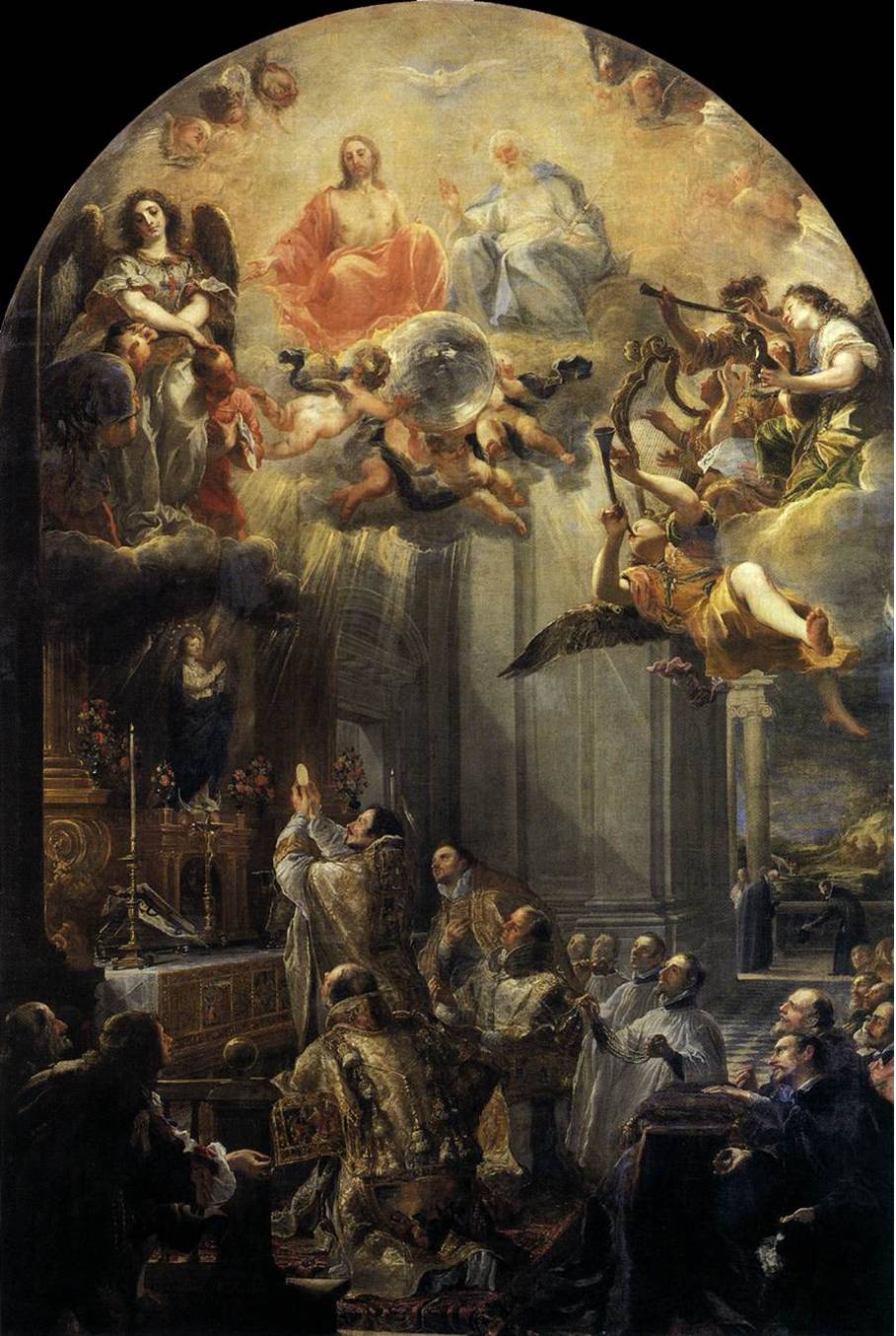
The Church is the Bride of Christ, she is our Mother; we ought to love her because she brings us to Jesus and unites us to Him. We ought to love and revere her doctrine, because it is doctrine of Jesus Christ; to love her prayer and associate ourselves with it because it is the prayer of the Bride of Christ, and there is none safer for us, none more pleasing to Our Lord.
We ought to attach ourselves to the Church, to all that comes from her, as we should have been attached to the very Person of Jesus and all that came to us from Him, if it had been give us to follow Him during His earthly life.
St Pau compares her to an edifice 'built upon the foundation of the Apostles, Jesus Christ Himself being the chief cornerstone.' (Ipso summa angulari lapide Christo Iesu).
We live in this house of God, '…no more strangers and foreigners: but fellow citizens with the saints…' It is Christ 'in whom all the building, being framed together, groweth up into an holy temple in the Lord.'
- Dom. Columba Marmion, Christ the Life of a Soul
Wednesday, August 01, 2012
Marriage and Vocations Pt 3
Da
Boyz.
The men are not off the hook either. Just
like there is a jarring loss of authentic femininity in women today, there is also an equally
jarring loss of masculinity in men today as well. Heck, in this case, I’m even
willing to go as far as to say it was this loss of authentic masculinity that
resulted in reaction known as the feminist revolution. However, unlike women
who went wayward in a movement aimed at bettering women’s lives, men lost
themselves in a slightly more complicated fashion.
Authentic
Masculinity
To understand the heart of the problem, one
first must understand what the man is supposed to be. The very essence of man
is the need to sacrifice himself for the good of his family. In the bible,
Christ reminds the Pharisees that, in the beginning, ‘a man leave father and
mother, and shall cleave to his wife, and they two shall be in one flesh.’ This
very act of leaving the caregivers of his life to enter into the unknown world
is in itself a sacrifice. From then on, he will put aside his needs and desires
and physically exhaust himself in a job that he may or may not like to bring
home dough for his wife and children. In the past that would mean putting his
body on the line to go hunt, in the modern world, it is sitting at a desk all
day long.
All this can be observed through natural
law. In some tribes there are coming of age rituals, signifying the boy’s
transition from boyhood to manhood. From then on, he is expected to keep the
company of the men, where he learns to be one of them and to hunt and protect
his family. Even biology mimics this, where at the age of 4, the boy must
separate himself from his mother and join to his father, or gender identity
disorder may occur.
It is in this bond that the boy learns how
to carry out his masculine duties through imitation, how to sacrifice himself
and treat every woman as a lady, to put himself second, and give her the first
place.
To draw a parallel, it is this same path
that Christ, Himself, took. He left heaven and took on the form of man, where,
He then went and sacrificed His body through the beatings, scourging, the crown
of thorns, the carrying of the cross, and finally the crucifixion itself in
order to redeem the entire world. It is this external sacrifice that is innate
in masculinity that allows a man to become a priest and to act in persona
Christi, in the person of the most masculine, to offer up the sacrifice of the
most innocent to God the Father.
Hence the occupations that boysmost
identify with often require some form of physical sacrifice. Every boy at one
stage has wanted to be a soldier or a policeman or a fire fighter. To serve and
protect is practically innate within the male. That is why men were given such
great passions and energy, to channel it for the greater good of society. It is
in growing up that we learn to master these passions and to defeat dragons, the
first of which being ourselves. Only when we have the discipline to conquer our
passioned wants and needs will we have the ability to take on other dragons, to
be ready for battle. We were meant to be knights in shining armour. So where
did we go wrong?
Utilitarianism
The fallout of traditional philosophy
during the enlightenment period gave rise to empiricism and skeptism, which led
to the ethics of Utilitarianism. As mentioned in the previous articles,
Utilitarianism can be summed up as ‘whatever means to achieve the greatest
pleasure’. It is a relativistic course of ethics whose moral principles largely
depend on what one can get away with. Hence, the spawning of the ‘me’
generation whose effects can be largely seen in almost every aspect of society.
In economics, duty and honour between employers and employees has since been
thrown out the door, it is how much the employer can milk his employees for
profit. In healthcare, doctors have been relegated to prescription writing,
pill dispensing units thanks to the application of Prinicipalism which has
utilitarian roots. In advertising it has become developed to the point of
whatever sells the product, and of course, that is sex. One hardly comes across
an advertisement nowadays that isn’t sexed up in some way.
When applied to the man, this idea of I’ll
use whomever I want to give me pleasure, has eroded the presence of the truly
masculine in society. Once men were protectors, they have either become
predators, just going around using women for their personal gain or they never
grow up, being stuck in front of the computer screen all day long, indulging in
their fantasies. This uh mascularism, if you will, the corruption of the
masculine with utilitarian principles, is why women who desire to get married
to a good and loving husband will be hard pressed to find one.
Over-sexed
Culture
It doesn’t help that the culture has become
sex-obsessed. The gender-sociologist have turned sexual preference into an
identity, elevating it from an accidental feature of humanity into an essential
feature, and the only essential feature, hence the LGBT movement and this silly
notion that one’s gender is completely a social construct, never mind the
staggering research into the physiological and anatomical differences between
men and women. You can choose whether you want to be a boy or a girl in the
head, but not whether you’re attracted to boys or girls. It’s all rather odd if
you ask me.
What’s more, in today’s culture, boys are
expected by society to watch pornography, masturbate and be promiscuous. This
could not be more contrary to nature! Pornography addiction is particularly
prevalent and its incidence is on the rise. What’s the big deal you ask? Well,
leaving aside the obvious problems for the moment, like that it’s a grave sin, it
denigrates the marital act in its fiction and teaches men to objectify women,
what about the fact that porn stars themselves are horribly damaged and abused
individuals? That’s right, as long as you watch pornography, you are supporting
the abuse of men and women who are completely broken and damaged inside. (see
theporneffect.com)
Masturbation is also a very dangerous
habit. I won’t say much and let C.S Lewis do the talking for me, ‘For me the
real evil of masturbation would be that it takes an appetite which, in lawful
use, leads the individual out of himself to complete (and correct) his own
personality in that of another (and finally in children and even grandchildren)
and turns it back, sends it back into the prison of himself, there to keep a
harem of imaginary brides. And this harem, once admitted, works against his
ever getting out and really uniting with a real woman. For the harem is always
accessible, always subservient, calls for no sacrifices or adjustments, and can
be endowed with erotic and psychological attractions which no real woman can
rival.’
Read more about that here in an article by
Fr John Harvey, OSFS on the Courage website http://couragerc.net/Masturbation.html
I think I don’t need to speak as well about
how sleeping around will mess a man up completely as well.
Chivalry
is Dead
All these grave sins have lead to a huge
rusting of the shining armour that men once proudly wore because the armour of
virtue and chivalry cannot be worn by a man who is unable to lead such a life.
The armour requires a great strength of mind to put on and to sustain, a great
strength that can only come from God. When one is his natural state of
sanctifying grace, in that communion with God, how light he is, and how light
this armour will be. The opposite will of course be when he bogged down by
these sins. In essence, the modern man, shackled by the fetters of pornography
and sexual addiction, will have to overcome great obstacles in order to remain
true to his essential nature, his masculinity. These sexual sins in particular
have lead to an objectification of women, and ultimately to their degradation.
When men view women as a objects, as commodities, they will no longer see
persons to protect but things to possess, and there goes the masculine.
In addition to these woes, the feminist
movement has also put a stop to the little courtesies that men afforded women
in their external sacrifice of the self. The sacrifice of the feminine is an
internal one, a sacrifice of the ego, in her mercy, she allows the man to care
for her and look after her. It is in this act, that she allows the man to
fulfil his masculinity. However, in becoming feminists, the women have
essentially said no to masculinity and allowed men to become jerks. That said,
I will agree that it is the men’s fault that the feminist movement erupted in
the first place.
In
Brief
Boys, you have a duty to God, to society,
to women and to yourself, to be masculine men. To be the gentlemen regardless
of how you are treated and to protect always, even those whom you have never
met (but are tempted to view electronically).
Subscribe to:
Posts (Atom)